
The best control tennis rackets
Control is not a marketing word — it's a set of real specs: dense patterns (18x19 / 18x20) or 16x19 in 97–98 sq in heads, weights from 300 g, moderate stiffness, and direct feedback at impact. These five are the current-gen references for players who already generate their own pace. All are demanding in one way or another — a guide for improving intermediates and above.
Updated:
Key specs, side by side
| Racket | Head (sq in) | Weight | Pattern | Stiffness | Approx. price |
|---|---|---|---|---|---|
WilsonBlade 98 (16x19) v9 | 98 | 305g | 16x19 | 62 RA | €260 |
HeadPrestige MP 2025 | 99 | 310g | 18x19 | 62 RA | €260 |
YonexPercept 97 | 97 | 310g | 16x19 | 62 RA | €260 |
TecnifibreT-Fight 305 (ISOFLEX) | 98 | 305g | 18x19 | 64 RA | €250 |
PrincePhantom 100X 18x20 (2024) | 100 | 320g | 18x20 | 59 RA | €200 |
Unstrung weight, string pattern and stiffness (RA) from each manufacturer's official specs. Prices are approximate European MSRP in euros.
How we picked
- 01
Dense pattern or reference 16x19
We default to 18x19 and 18x20. We include the Blade 98 v9 (16x19) because it's the industry consensus as a control racket for intermediates — the pattern isn't always the only factor.
- 02
Head size 97–100 sq in
Smaller heads tighten the sweet spot and amplify feedback. 100 is the maximum acceptable for control. Below 97 falls outside this segment on accessibility grounds.
- 03
Weight ≥ 300 g
Stability under fast incoming balls comes from mass. Light frames deflect on heavy returns; from 300 g the frame absorbs and redirects.
- 04
Moderate stiffness (RA 59–66)
A stiff frame amplifies the ball's natural energy — the opposite of control. Lower RA extends dwell time on the strings, which is what players call 'feel' or 'touch'.
Want a control racket tuned to your game?
Take the quiz — we already know you value control, so we'll focus the questions on your level, body and style.
Our five control picks
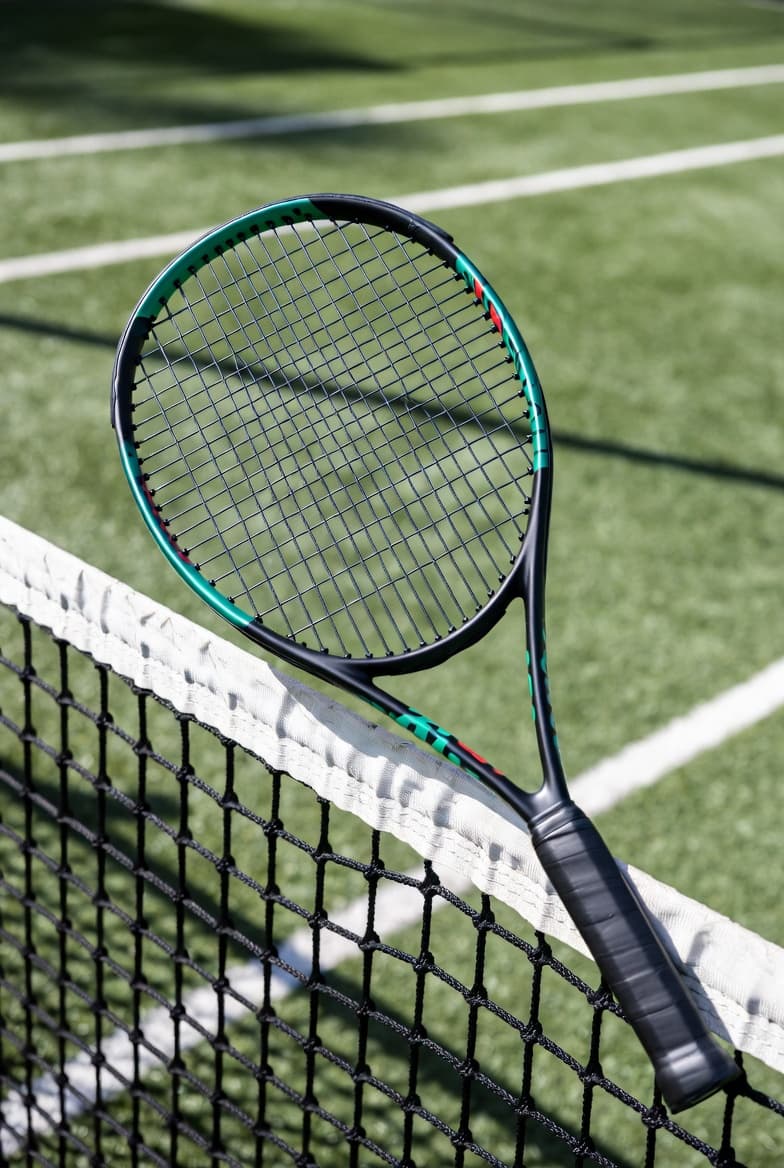
Wilson
The reference control pick for intermediates
Great for advanced level€260
The Blade 98 v9 is the absolute market consensus for 2025–2026 as a control racket for advanced intermediates. 305 g, 98 sq in, flat 21 mm beam, 16x19 with very defined feedback. The new StableFeel adds a touch of stability without killing the feel. If you could only have one control racket, this is the safest answer.
Best if
You play at least twice a week and want a racket that gives you clear information on every shot.
Might not be for
You rely on heavy spin to control depth.
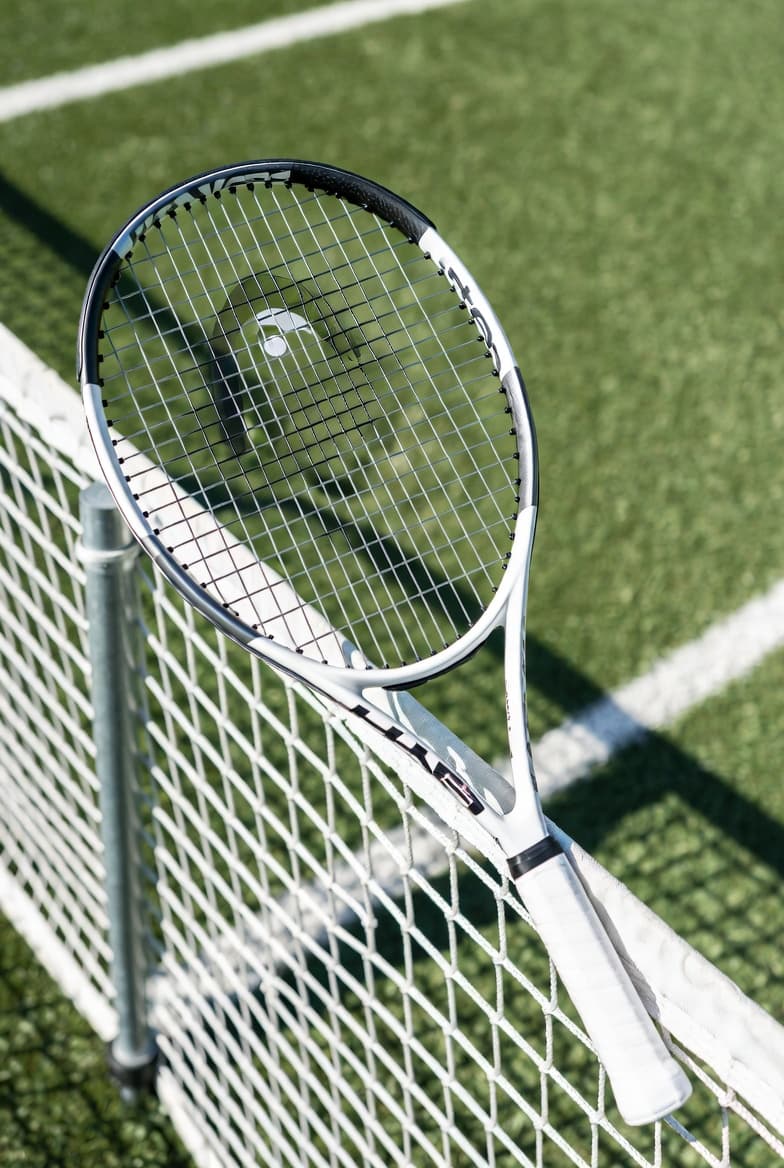
Head
Classic 18x19 control
Great for advanced level€260
The Prestige MP 2025 (Auxetic 2) is one of the most traditional player's frames in the catalogue: 99 sq in, 310 g, 18x19, 21.5 mm box beam. It descends from Berdych's and McEnroe's line. Auxetic 2 in the yoke softens the feel vs. older Prestiges without losing the predictability that defines the line.
Best if
Your technique is built and you want the classic 18x19 feel without giving up modern comfort.
Might not be for
You're still refining off-centre hits — the 99 sq in punishes.
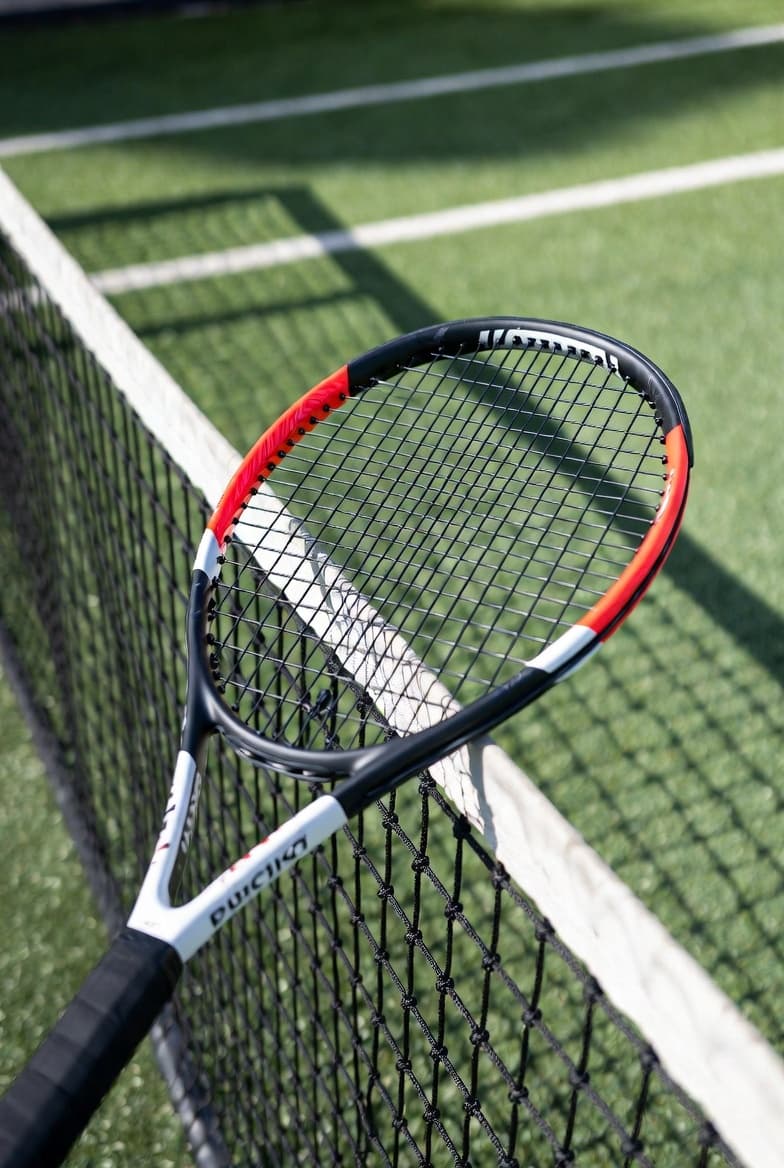
Yonex
Best feel and feedback
Great for advanced level€260
The Percept 97 is the explicit heir to Yonex's VCORE Pro. 97 sq in, 310 g, 16x19, 62 RA and a softer layup than its Ezone or VCORE siblings. The small head punishes off-centre hits — that's a feature, not a bug: it transmits very clear information about impact, which is what a control player wants.
Best if
You value feedback over easy power and hit clean most of the time.
Might not be for
You're still fighting timing on full swings.
Tecnifibre
Medvedev's actual frame
Great for advanced level€250
The T-Fight 305 (ISOFLEX generation, 2023) is the one Daniil Medvedev actually plays, not a generic commercial spin-off. 98 sq in, 305 g, 18x19, 64 RA. ISOFLEX distributes stiffness progressively around the frame. It rewards a long, fluid stroke and punishes lazy technique in equal measure. The Blade 98 v9 is easier to live with; this one rewards more when you nail it.
Best if
You play 3+ times a week and trust your swing under pressure.
Might not be for
You rely on free power from the racket.
Prince
Real control + real comfort
Safe pick€200
The Phantom 100X 18x20 (2024, with Zylon ATS) is a rare thing: an 18x20 frame that is also genuinely arm-friendly thanks to its 59 RA stiffness — the lowest on this list. 320 g unstrung, 100 sq in, tight pattern. You get the directional predictability of an 18x20 without the harshness that usually comes with it.
Best if
You want 18x20 precision but your elbow can't take a stiff frame.
Might not be for
You want easy depth and power without working for it.
Who each pick is for
| Racket | Player profile | Best-matched style | OK with arm issues | Quick verdict |
|---|---|---|---|---|
| Wilson Blade 98 v9 | Advanced intermediate | Aggressive with full swing | Neutral (RA 62) | Safest pick of the bunch. |
| Head Prestige MP 2025 | Classic advanced | All-court precision | OK (RA 62) | The most modern 18x19. |
| Yonex Percept 97 | Advanced with clean technique | All-court, flat shots | OK (RA 62) | Most demanding; most expressive. |
| Tecnifibre T-Fight 305 | Intense advanced | Aggressive baseline | Neutral (RA 64) | Medvedev's actual frame. |
| Prince Phantom 100X 18x20 | Advanced with sensitive elbow | Defensive / all-court | Yes (RA 59) | 18x20 without the arm cost. |
Paths toward control
Pure Drive / Pure Aero
The smoothest switch toward control: you lose free power but gain feedback, and you don't need to rebuild your timing.
Head Speed MP
Same technical family — the logical next step when 16x19 starts feeling too powerful for your game.
Wilson Blade 98
If the Blade feels short on feedback and you want more classical impact information, the Percept is a step forward, not sideways.
Any stiff 18x20 (Pro Staff 97, Pure Strike)
When your elbow complains but you don't want to drop the dense pattern, the Phantom is the only real 59-RA option.
Is a control racket right for you?
Be honest about your swing speed
Control rackets give you almost nothing for free. If your forehand swing is short or tentative, the ball will land short — and you'll blame the racket when the issue is pace generation.
Test the racket on your bad days
Any frame feels great when your timing is on. A real test is how the racket behaves when you're tired or off — if a control frame feels unforgiving on off days, you'll regret it over a season.
Strings amplify the choice
A control frame strung with a soft multifilament can feel surprisingly powerful. If you want maximum control, pair with polyester at sensible tension — not too tight, which kills both control and your elbow.
Frequently asked
- Can I play with 18x20 if I have a sensitive elbow?
- Yes, with caveats. A dense pattern alone doesn't hurt the elbow — what amplifies damage is frame stiffness + tight poly strings. The Phantom 100X 18x20 (59 RA) proves you can have a tight pattern without the penalty. Pair with multifilament at 22–24 kg and you'll be fine.
- Is the Speed MP a control racket?
- Not quite. The Speed MP is an all-court frame with a control tilt, but it's not the same segment as a Blade 98 or a Prestige. That's why we leave it out of this guide — if you want one racket that does everything, the Speed MP is a good option and it's in our 'best overall' guide.
- Blade 98 16x19 or 18x20?
- For 90% of players, the 16x19. The 18x20 is flatter and less forgiving; it only makes sense if you already generate plenty of spin and want that extra directional control. We recommend the 16x19 in most contexts.
- Why isn't the Pure Strike in your top 5?
- It's a solid aggressive-control racket and is in our 'best overall' guide, but within the control-specific segment the Blade 98 v9 and Prestige MP better cover the usual archetypes. The Pure Strike sits at the border between control and aggressive.
- What strings do you recommend for a control racket?
- Monofilament polyester (Luxilon Alu Power, RPM Blast, Hyper-G) at moderate tension (22–24 kg) for advanced players. Poly + multi hybrid if your elbow needs a break. Don't string above 26 kg — it kills control sooner than you'd think.
Control is earned — and your racket matters.
Five questions, sixty seconds. The engine checks your answers against all 30 frames and returns your personal top 3.
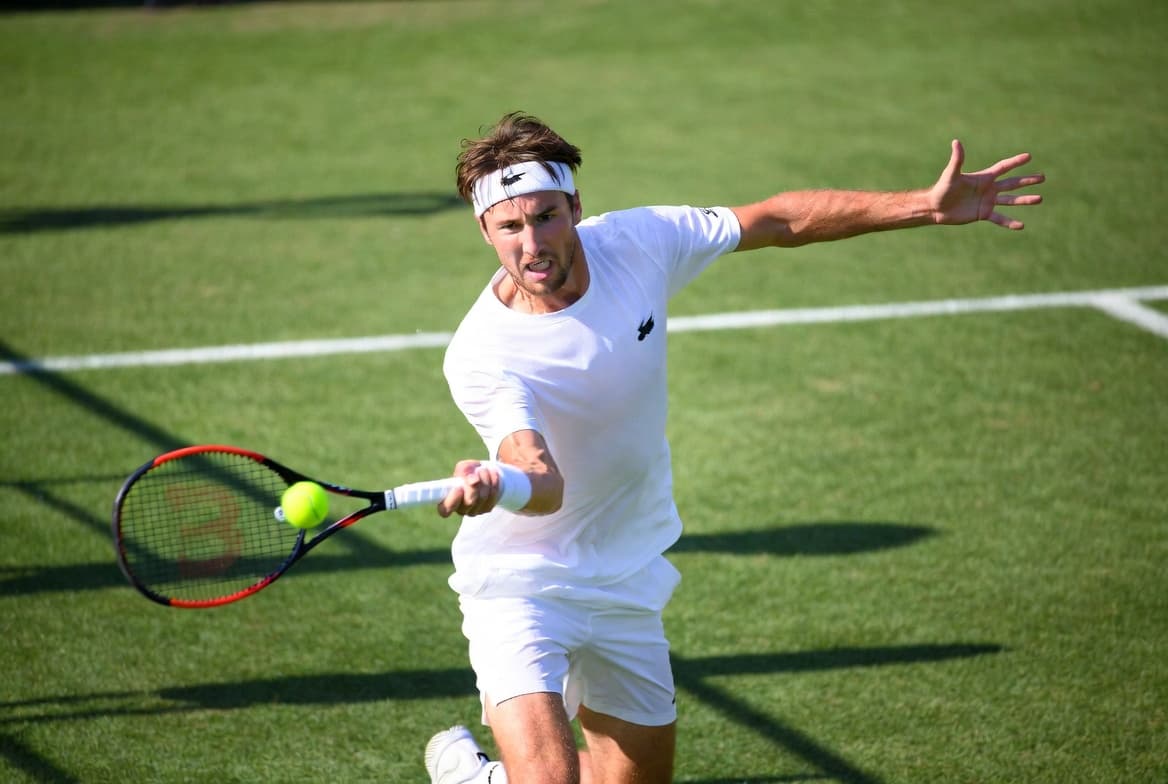
How we evaluated each racket
This guide is not a list of generic opinions. Every pick comes from the same deterministic engine powering the quiz, and its specs are verified against official sources.
- Specs: head, weight and string pattern straight from the manufacturer's official pages.
- Stiffness (RA): Tennis Warehouse University RDC lab measurements where available.
- Prices: official European MSRP in euros — not volatile promotional prices.