
The best power tennis rackets (2026) — hit harder without losing control
If you struggle to generate depth from the baseline or your winners keep landing short, the problem isn't always technique — sometimes the frame simply doesn't return enough energy. This guide picks five current-gen power rackets covering five distinct archetypes: the reference, the versatile alternative, the arm-friendly option, the raw aggressive pick and the accessible entry point. Every claim is tied to a real spec — not a marketing adjective.
Updated:
Key specs, side by side
| Racket | Head (sq in) | Weight | Pattern | Stiffness | Approx. price | Recommended level |
|---|---|---|---|---|---|---|
BabolatPure Drive 2025 | 100 | 300g | 16x19 | 68 RA | €270 | Intermediate to advanced |
DunlopFX 500 (2026) | 100 | 300g | 16x19 | 71 RA | €250 | Intermediate |
HeadBoom MP 2024 | 100 | 295g | 16x19 | 62 RA | €230 | Intermediate to advanced |
WilsonBurn 100 v5 | 100 | 300g | 16x19 | 70 RA | €210 | Intermediate (aggressive) |
BabolatPure Drive Team 2025 | 100 | 285g | 16x19 | 70 RA | €220 | Beginner to intermediate |
Unstrung weight, string pattern and stiffness (RA) from each manufacturer's official specs. Prices are approximate European MSRP in euros.
What actually makes a racket powerful
Power isn't just about stiffness. It's the interaction of swingweight, frame stiffness, head size and string bed response — and it changes completely depending on the strings you install.
- 01
Swingweight above 310 (strung)
Swingweight is the single best predictor of how much mass reaches the ball at contact. A frame can weigh 300 g on a scale but if the mass is concentrated at the handle, it won't hit through heavy balls. Our picks range from ~315 (Boom MP) to ~330 (Pure Drive) strung swingweight — the zone where depth becomes natural without the frame feeling sluggish.
- 02
Frame stiffness 62–72 RA
Stiffer frames return energy faster — less dwell time, more ball speed. But above 72 RA the arm pays the price fast. Our five picks sit between 62 and 71 RA. The Boom MP at 62 proves you can have genuine power without a stiff frame, provided swingweight and construction compensate.
- 03
Head size 100 sq in
All five picks share a 100 sq in head — the modern sweet spot for power. Larger heads generate more trampoline effect but lose precision; smaller heads need more swing speed to produce depth. At 100 sq in, the string bed is large enough to forgive and powerful enough to launch.
- 04
Weight 285–300 g unstrung
Mass contributes to plow-through: the ability to maintain ball speed even against heavy incoming shots. Below 285 g, the frame deflects on pace; above 305 g, most intermediates can't swing fast enough to benefit. 295–300 g is the power sweet spot for most players.
- 05
16x19 string pattern (open enough for launch)
Every pick uses a 16x19 pattern. Open enough to generate ball launch angle and spin, dense enough to keep directional control. Denser patterns (18x19, 18x20) trade power for precision — the opposite of what this guide is about.
Find out which of these 5 fits your game in 60 seconds
The quiz factors in your level, swing speed and playing style — not just what's popular.
Five power rackets — five different ways to hit harder
Babolat
The power reference since 2010
Great for intermediate level€270
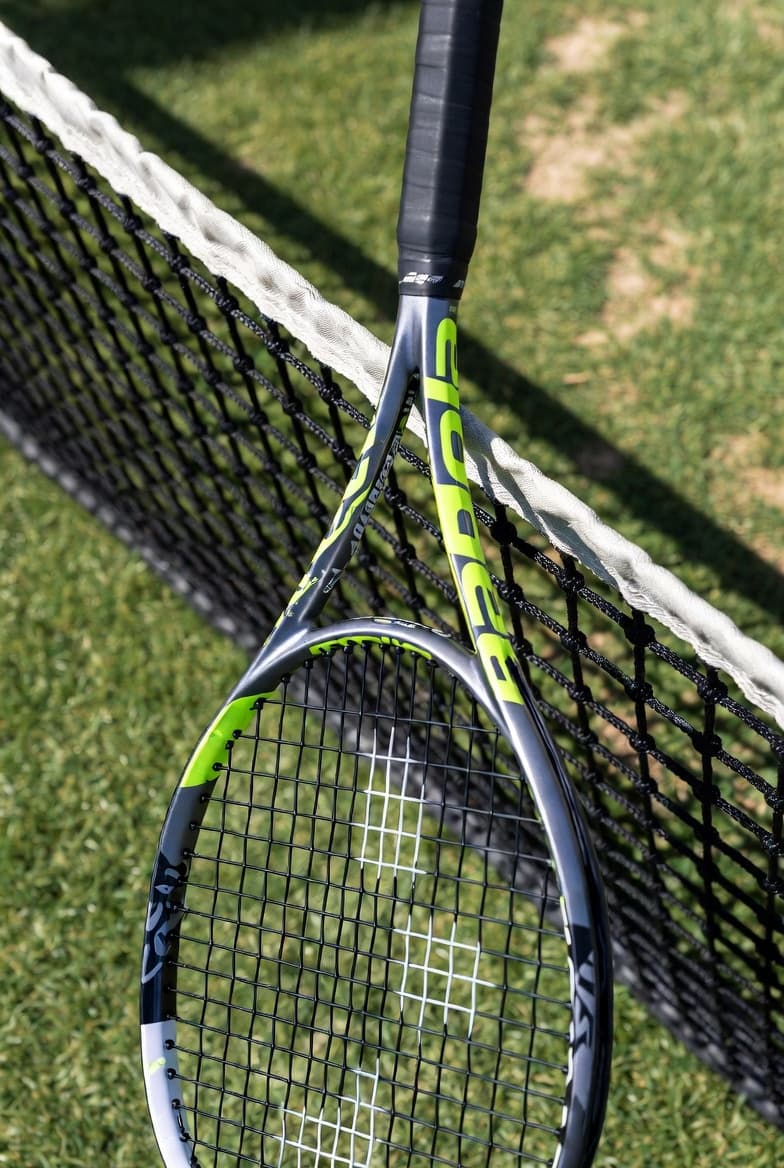
The Pure Drive 2025 is the 11th generation of what remains the single most-sold performance racket in Europe. 300 g, 100 sq in, 68 RA (TWU-measured, not the 72 Babolat advertises), 16x19. The 2025 adds NF2 Tech flax damping that softens the feel notably vs the 2021 version — same power, less harshness. When people say 'power racket', this is what they mean. If you've never tried one, start here.
Best if
You want the benchmark — the frame every other power racket is measured against.
Might not be for
You want precise feedback and touch. The Pure Drive launches the ball effectively but doesn't tell you much about where it hit the string bed.
Dunlop
Power + spin versatility
Great for intermediate level€250
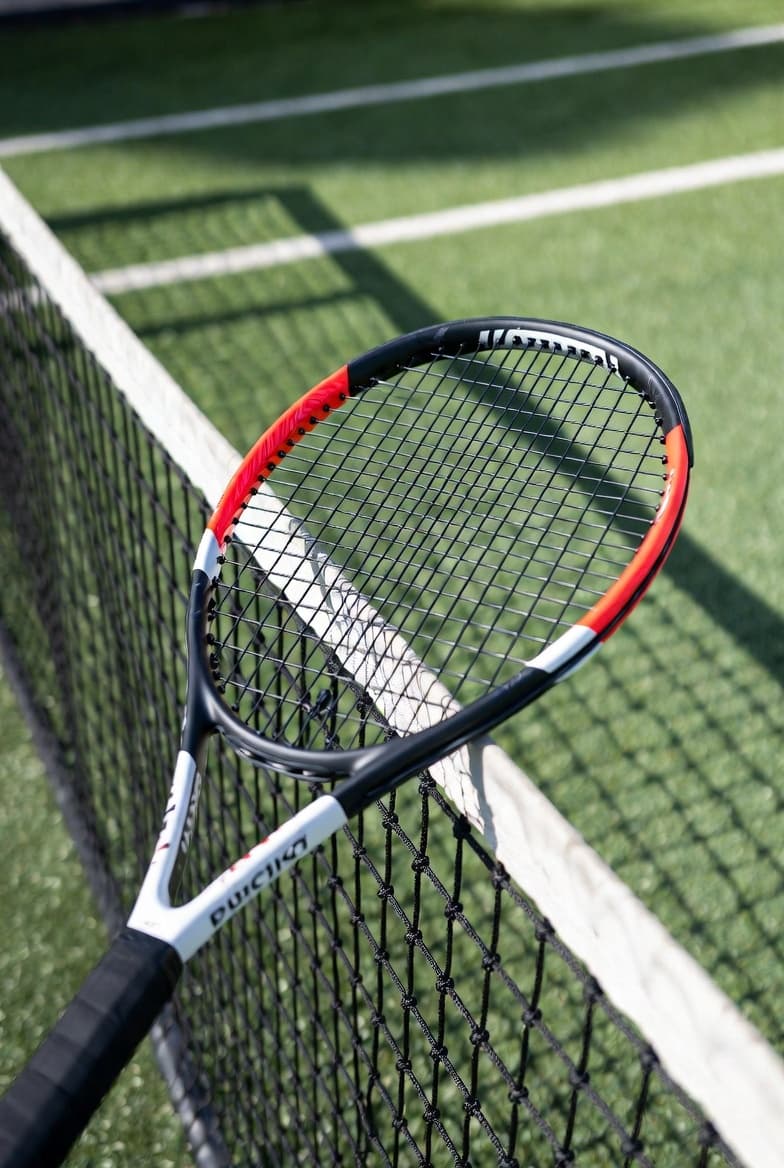
The FX 500 2026 is Dunlop's full refresh: 300 g, 100 sq in, 71 RA, lower swingweight than the previous generation (~320 strung vs ~325). It matches the Pure Drive on raw power but adds slightly more spin potential thanks to a marginally more open string bed geometry. Less famous, equally effective — and often €20 cheaper.
Best if
You want Pure Drive-level power but also use topspin to control depth, not just pace.
Might not be for
You want arm comfort — 71 RA is the stiffest on this list. Pair with multifilament if your elbow is even slightly sensitive.
Head
Power without punishing the arm
Safe pick€230
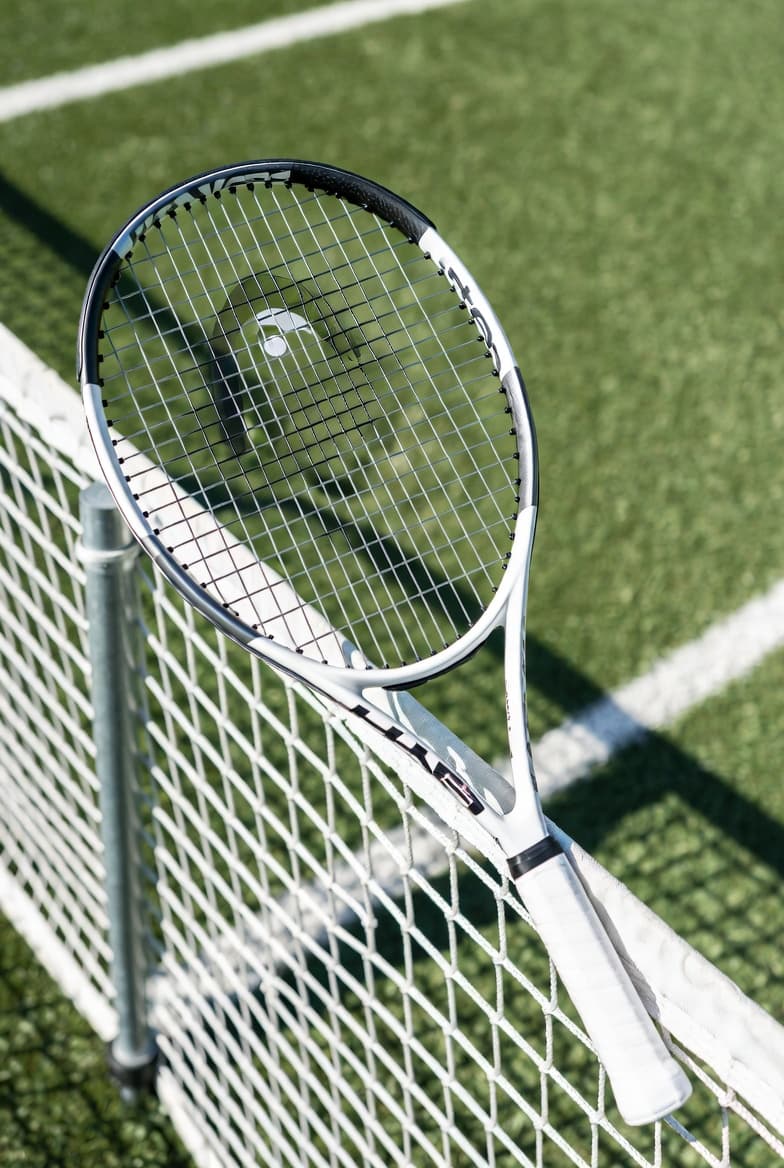
The Boom MP 2024 is Head's proof that power doesn't require stiffness. 295 g, 100 sq in, 62 RA — the lowest on this list by a wide margin — yet it generates genuine depth through smart mass distribution and Auxetic construction that keeps the sweet spot stable. It won't hit quite as hard as the Pure Drive on a flat forehand, but it gets close enough that most intermediates won't notice the gap — and the arm difference is massive.
Best if
You want real depth and power but your arm matters to you. The 'power without punishment' pick.
Might not be for
You want maximum raw power and you don't have arm issues. The Pure Drive and FX 500 hit harder — that's a fact, not a flaw.
Wilson
Aggressive power for winners
Popular choice€210
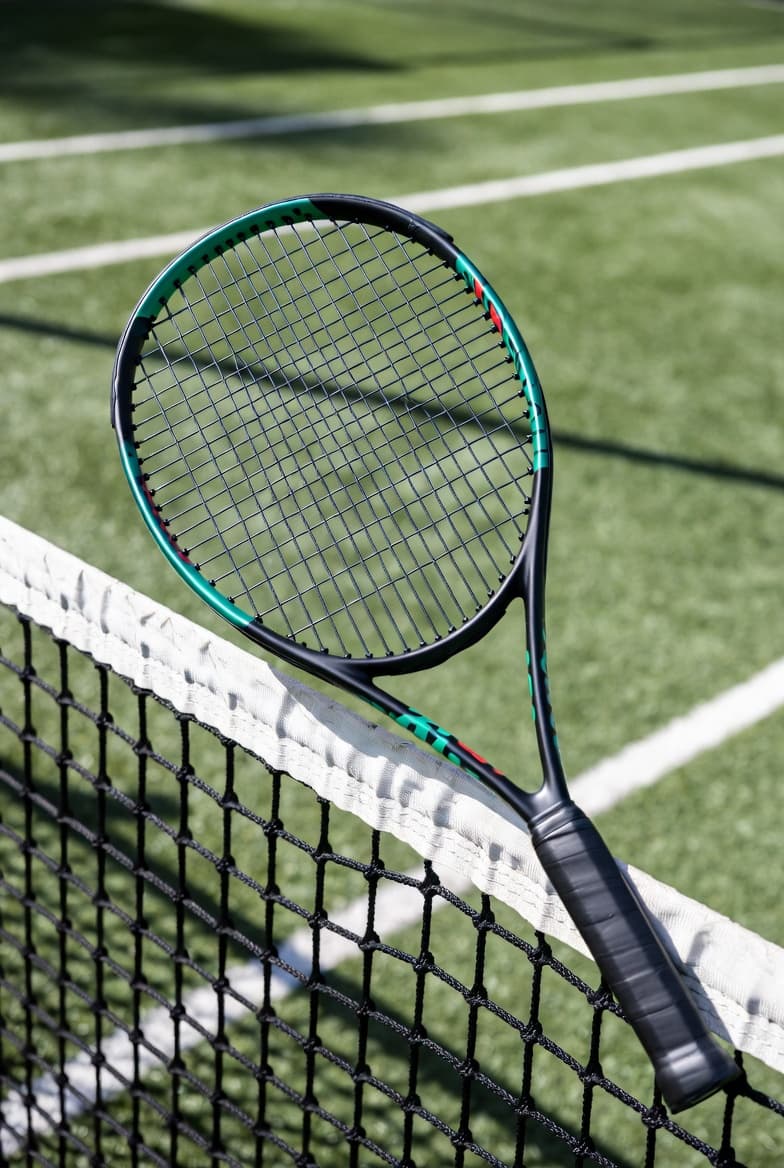
The Burn 100 v5 is Wilson's aggressive-baseline frame: 300 g, 100 sq in, 70 RA, balance at 320 mm (the most head-light here). That head-light balance makes it faster through the air on flat forehands and first serves — exactly where aggressive players want their power. Less forgiving on off-centre hits than the Pure Drive, but more explosive when timing is right. At ~€210, it's also the cheapest 300 g power frame on this list.
Best if
You play aggressively, go for winners often, and want a frame that rewards clean hitting.
Might not be for
You rely on the racket to do the work. The Burn demands timing — mishits lose depth fast.
Babolat
Accessible power at 285 g
Popular choice€220
The Team variant keeps the Pure Drive 2025 DNA — same mold, same string pattern, same NF2 damping — at 285 g instead of 300 g. Swingweight drops proportionally, so it's noticeably easier to swing on time. That makes it the natural entry point for improving players who want power but can't handle 300 g for three sets yet. Trade-off: it's still 70 RA, so arm comfort is average at best.
Best if
You want the Pure Drive feel but 300 g tires you after two sets, or you're moving up from a lighter beginner frame.
Might not be for
You already generate serious pace — at 285 g the frame gets pushed around by heavy incoming balls.
Which power pick serves which player
| Racket | Player profile | Best-matched style | OK with arm issues | Quick verdict |
|---|---|---|---|---|
| Babolat Pure Drive 2025 | Intermediate to advanced | Baseline, all-court | Average (RA 68) | The default power pick. |
| Dunlop FX 500 (2026) | Intermediate | Topspin baseline | Low comfort (RA 71) | Same power, more spin versatility. |
| Head Boom MP 2024 | Intermediate to advanced | All-court | Yes (RA 62 — arm-friendly) | Power without the arm cost. |
| Wilson Burn 100 v5 | Intermediate (aggressive) | Aggressive baseline | Average (RA 70) | Fastest through the air. |
| Babolat Pure Drive Team 2025 | Beginner to intermediate | Baseline | Average (RA 70) | Entry-level power for improvers. |
Which one should you choose — by your actual case
You're a beginner who wants depth without effort
The Team gives you Pure Drive DNA at a manageable weight. The Boom adds arm comfort. Both generate depth without demanding a full swing — the ball 'comes off the strings' naturally.
You're intermediate and want to step up from a soft frame
Both are the real thing: 300 g, proper swingweight, genuine plow-through. The Pure Drive is the safe pick; the FX 500 is the spin-friendly alternative. Whichever you choose, your depth will change on day one.
You play aggressively and want to finish points faster
Head-light balance at 320 mm makes flat forehands and first serves faster. It rewards clean timing more than any other pick here — and punishes bad timing more too.
You want power but your arm already complained
62 RA is the only genuinely arm-friendly frame on this list. It doesn't hit as hard as the Pure Drive — but it hits hard enough to win points while your elbow stays quiet. Pair with multifilament at 23 kg.
If you're torn between two picks, the quiz helps you decide based on your level and swing speed in under a minute.
Pure Drive vs FX 500 vs Boom MP: which power racket is right for you?
Three of the five picks cover 90% of power-seeking players. Here's how they compare head-to-head.
Pure Drive 2025
- The benchmark (RA 68, ~330 SW strung)
- Most proven frame in the category
- Best if you want maximum raw depth
Dunlop FX 500 (2026)
- Similar power, more spin versatility
- Slightly lower swingweight (~320 strung)
- Best if you mix topspin and flat shots
Head Boom MP 2024
- Power at 62 RA (arm-friendly)
- Slightly less raw depth than the other two
- Best if arm comfort matters as much as power
Maximum power: Pure Drive · Power + spin: FX 500 · Power + arm comfort: Boom MP.
Mistakes that kill your power (even with the right racket)
A powerful frame is only part of the equation. These three mistakes undo most of the power a good racket can give you.
Strings change power perception completely
The same Pure Drive feels like a different racket with polyester at 25 kg vs multifilament at 22 kg. Poly at high tension tames power (useful for advanced players); multi at low tension amplifies it (useful for intermediates who want effortless depth). Don't judge a power frame until you've tested it with at least two different string setups.
Stiff doesn't always mean powerful
The Boom MP at 62 RA generates genuine depth despite being 9 points softer than the FX 500 at 71 RA. Swingweight and mass distribution matter as much as stiffness — sometimes more. If you only look at RA to judge power, you'll miss frames like the Boom that deliver it through a completely different path.
A light frame is not 'easy power'
Below 285 g, the racket deflects on heavy incoming balls and you lose plow-through — the exact opposite of power. If a 300 g frame tires your arm, the answer isn't a lighter frame. It's a better-balanced frame (like the Boom MP at 295 g) or a different string setup. Dropping mass costs more power than it saves effort.
Frequently asked
- What is the most powerful tennis racket in 2026?
- In raw power output, the Babolat Pure Drive 2025 remains the benchmark: 300 g, 68 RA, highest measured swingweight of the five (~330 strung). The Dunlop FX 500 matches it closely with slightly more spin potential. But 'most powerful' depends on your arm and your swing — if you need arm comfort, the Head Boom MP at 62 RA delivers 85–90% of the power at half the elbow cost.
- Can I get power without a stiff racket?
- Yes. The Head Boom MP at 62 RA generates real depth through mass distribution and Auxetic construction rather than frame stiffness. Swingweight matters as much as RA for power — a flexible frame with high swingweight hits harder than a stiff frame with low swingweight. Stiffness is one path to power, not the only one.
- Pure Drive or FX 500 — which should I buy?
- If you play mostly flat or with moderate topspin: Pure Drive. If you use heavy topspin to control depth: FX 500. On raw power they're nearly identical. The FX 500 is slightly easier to swing (lower swingweight) and usually €20 cheaper. The Pure Drive has decades of refinement and the largest resale/demo ecosystem.
- Which power racket for a beginner?
- The Babolat Pure Drive Team (285 g) is the only pick on this list we'd recommend to a beginner. The full Pure Drive at 300 g is too heavy for developing technique, and the Burn demands timing beginners don't have yet. If you're a complete beginner, check our beginners' guide first — power isn't the priority when you're learning the strokes.
- Do strings really change power that much?
- Dramatically. A Pure Drive with stiff polyester at 25 kg feels controlled and muted. The same frame with multifilament at 22 kg feels explosive. Strings affect power perception more than a 5-point RA difference between frames. If you want maximum power: multifilament at 22–23 kg. If you want to tame the power: polyester at 24–25 kg.
- What's the difference between a power racket and a control racket?
- A power racket returns more energy to the ball — you get depth and pace without having to generate it all yourself. A control racket absorbs energy — you generate the pace, the frame directs it precisely. Power frames: stiff, high swingweight, 100 sq in head. Control frames: flexible, dense pattern (18x19+), smaller head (97–99 sq in). If you generate your own pace, control is better. If you need help, power is better.
Depth doesn't have to be a struggle.
In under 60 seconds, the engine analyses your profile and recommends the 3 best rackets with power already optimised for your swing.

How we evaluated each racket
This guide is not a list of generic opinions. Every pick comes from the same deterministic engine powering the quiz, and its specs are verified against official sources.
- Specs: head, weight and string pattern straight from the manufacturer's official pages.
- Stiffness (RA): Tennis Warehouse University RDC lab measurements where available.
- Prices: official European MSRP in euros — not volatile promotional prices.