
The best tennis rackets for beginners
A first racket shouldn't be a compromise or an impulse buy. These five are organised by price tier (≤€140 / €150–€220 / €220+) so you see what to expect at each range and pick with context. All share the basics: large head, manageable weight, and construction that's kind to the arm while your technique settles.
Updated:
Key specs, side by side
| Racket | Head (sq in) | Weight | Pattern | Stiffness | Approx. price |
|---|---|---|---|---|---|
BabolatEvo Drive | 104 | 270g | 16x19 | 65 RA | €120 |
VölklV-Cell 7 105 | 105 | 285g | 16x19 | 60 RA | €140 |
YonexAstrel 105 | 105 | 260g | 16x19 | 58 RA | €200 |
BabolatPure Drive Team 2025 | 100 | 285g | 16x19 | 70 RA | €220 |
WilsonClash 100 v3 | 100 | 295g | 16x19 | 55 RA | €250 |
Unstrung weight, string pattern and stiffness (RA) from each manufacturer's official specs. Prices are approximate European MSRP in euros.
How we picked
- 01
Head size ≥ 100 sq in
Forgiveness matters when technique is still raw. Larger heads expand the sweet spot so mishits don't punish you — and build confidence faster.
- 02
Weight ≤ 300 g
Lighter frames are easier to swing on time. Anything above 305 g will tire the arm, slow reactions and make even good strokes feel laboured.
- 03
Kind to the arm
Beginners hit many off-centre balls. A flexible layup (low RA) plus a softer string bed absorb impact and reduce the risk of tennis elbow in your first year.
- 04
Three price tiers
Up to €140: first-year rackets. €150–€220: if you already have a sports base and will progress quickly. €220+: only if you buy with a 3+ year horizon in mind. One pick per tier — plus an extra pair to address sensitive arms specifically.
Not sure which tier fits you?
Tell us your level and a few preferences — the quiz matches your profile against all 30 rackets. Already filled: level = beginner.
Five rackets to start with
Babolat
Tier ≤€140 · Best overall
Safe pick€120
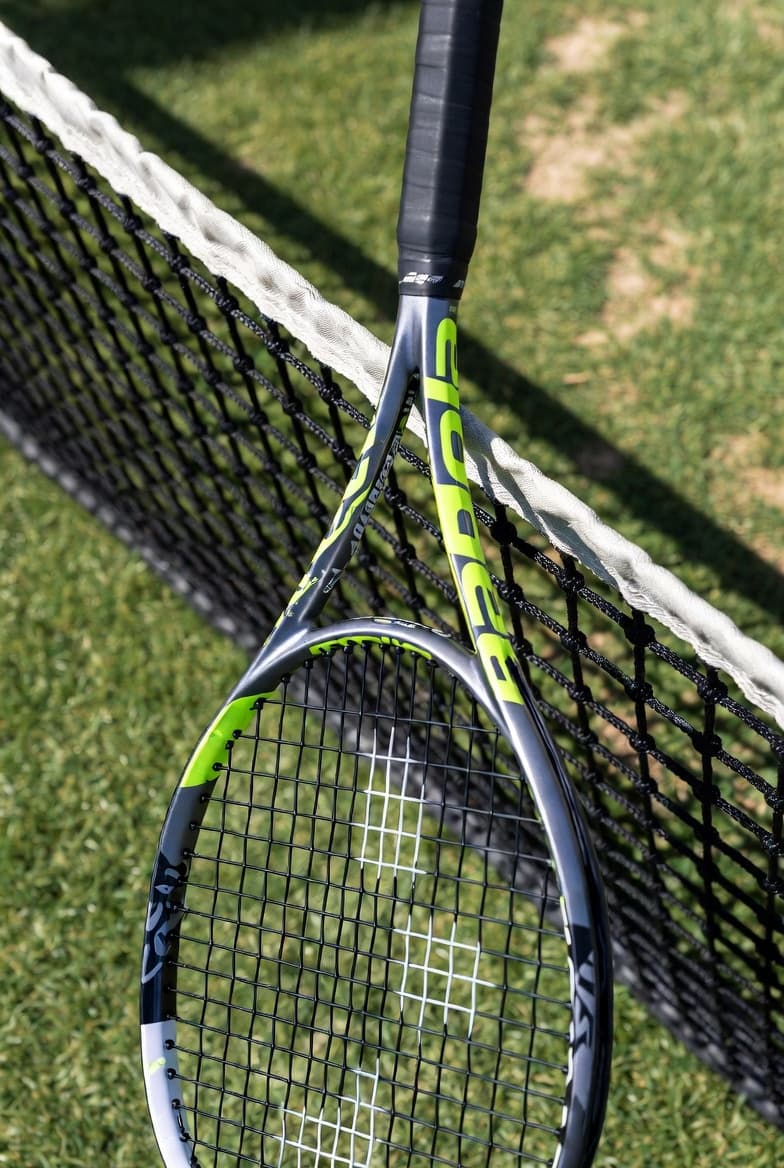
The Evo Drive is Babolat's modern take on the first-year racket: 270 g, 104 sq in, 65 RA and an honest price around €120. Easy to swing, easy on the arm thanks to Cortex Dampening, and genuinely enjoyable rather than just cheap. Consensus between The Tennis Tribe and Tennis Nerd puts it as the best all-round pick below €150.
Best if
You're starting out and want one racket that carries you through your entire first year with no excuses.
Might not be for
You already play well enough to miss a denser string pattern or a heavier frame.
Völkl
Tier ≤€140 · Maximum forgiveness
Safe pick€140
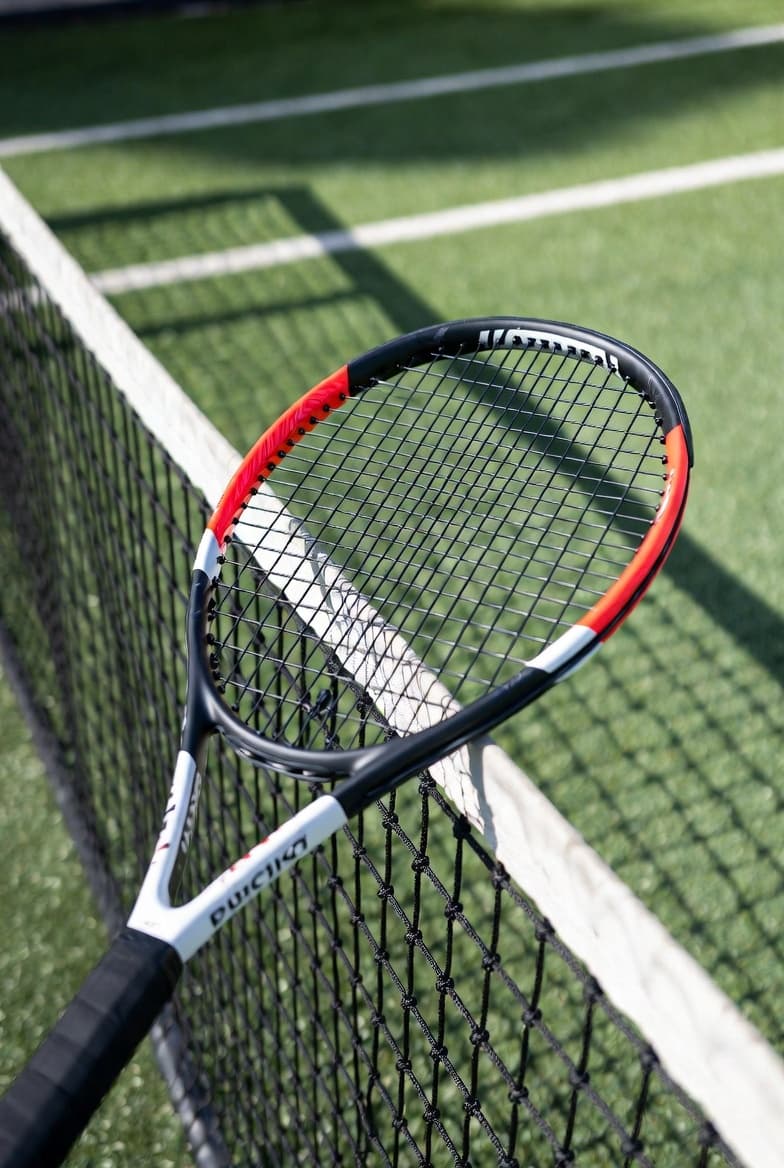
Völkl is the brand with the longest tradition in arm-friendly construction, even if less visible on the high street. The V-Cell 7 pairs 105 sq in with a very flexible layup (RA ~60) and a stable 285 g. If shanking is your fear and you want margin, it's more forgiving than any Babolat or Wilson at this price.
Best if
You want maximum forgiveness without paying premium, and you're open to brands that don't lead with raw power.
Might not be for
You plan on competing soon — the light weight falls short under pressure.
Yonex
Tier €150–€220 · Best for sensitive arms
Safe pick€200
The Astrel 105 is explicitly built around comfort. Its Namd graphite layup flexes on contact, protecting the elbow even when strings are tight. 260 g and 105 sq in make it forgiving without feeling toy-like. 58 RA — probably the most comfortable frame on this list if you have a history of arm issues.
Best if
You have a history of elbow or shoulder issues, or you're over 45 and want to play several times a week.
Might not be for
You want a fast, stable frame for aggressive or competitive play.
Babolat
Tier €150–€220 · Best if you'll improve fast
Popular choice€220
The Team variant (285 g) keeps the Pure Drive 2025 DNA — stable, powerful, modern — at a more manageable weight. If you're a beginner with a sports background who will likely be at intermediate level within a year, this frame won't hold you back. Caveat: it's still relatively stiff (70 RA), so it's not the pick for sensitive arms.
Best if
You learn sports fast and want a frame that can grow with you for a couple of years.
Might not be for
Your arm is sensitive — the Clash v3 or Astrel 105 are better options.
Wilson
Tier €220+ · Best long-term investment
Safe pick€250
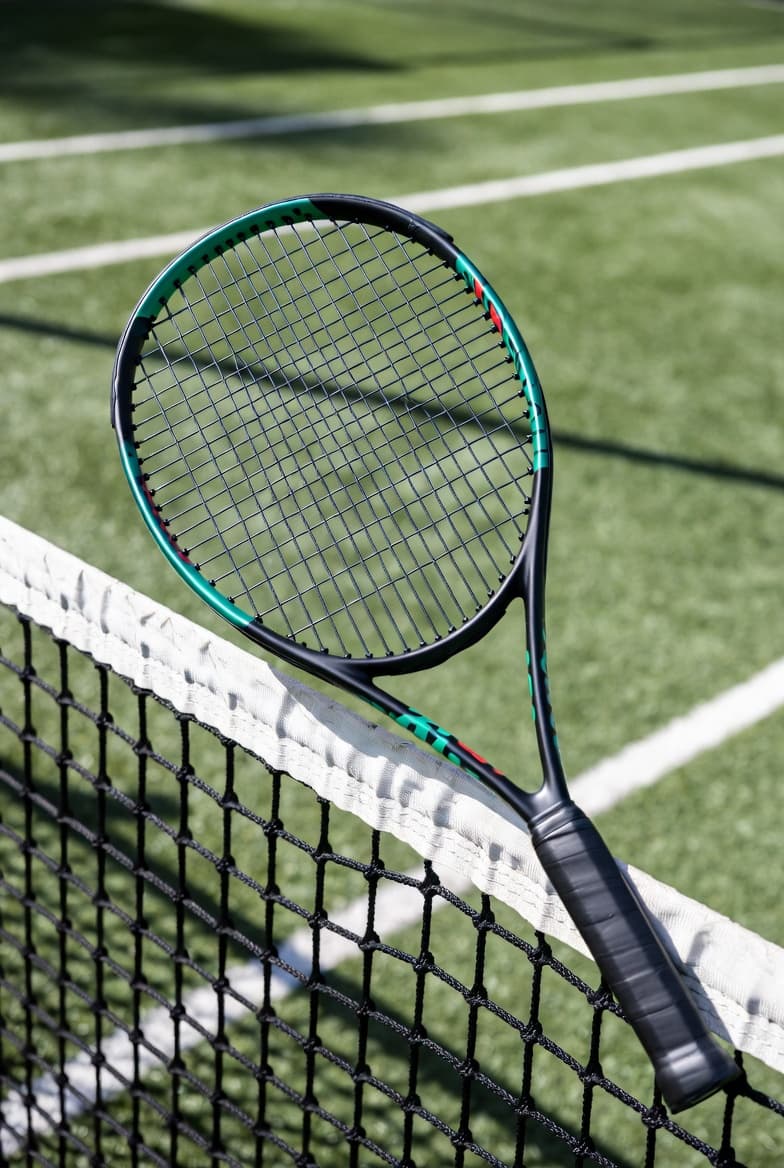
The Clash v3 is the most expensive on this list, but it's the only one you won't outgrow. 55 RA (the lowest you'll find in a real performance racket), 295 g, good spin potential and an arm-friendly feel that serves beginners, intermediates and many advanced players. If you intend to learn seriously and keep the racket for 3+ years, it pays off.
Best if
You'd rather buy once, buy well, and learn seriously for several years.
Might not be for
You only play once or twice a month, or you're not sure you'll stick with it.
Who each pick is for
| Racket | Player profile | Best-matched style | OK with arm issues | Quick verdict |
|---|---|---|---|---|
| Babolat Evo Drive | Adult getting started | Relaxed baseline | Yes (RA 65) | The sensible default choice. |
| Völkl V-Cell 7 105 | Anyone afraid of shanking | Defensive / returns everything | Yes (RA ~60) | Most forgiving in the budget tier. |
| Yonex Astrel 105 | 45+ adult or history of pain | Soft all-court | Yes (RA 58) | The most comfortable pick. |
| Babolat Pure Drive Team | Sporty beginner | Aggressive baseline | Limited (RA 70) | For quick-progression players. |
| Wilson Clash 100 v3 | Any level | All-court | Yes (RA 55) | The investment if you're committed. |
Clear paths based on why you're buying
You've played before with a borrowed racket
Don't spend over €140 on your first racket. Knowing what you actually want takes 3–6 months of real play first.
You feel elbow pain from the first weeks
The issue is usually stiff frame + poorly chosen strings. Lower RA and string softer, in that order.
You come from another racket sport (padel, badminton)
Your coordination will climb fast. A frame that caps you in six months is a wasted purchase.
You plan to take lessons and play 2–3 times a week
Amortise the investment: the Clash serves at beginner level and keeps serving when you reach high intermediate.
Mistakes to avoid on your first purchase
Don't buy a pro frame to start
A 310 g player's racket with a 95–97 sq in head will amplify every timing mistake. Beginners end up frustrated — and often quit — because the racket exposes weaknesses instead of compensating for them.
Measure your grip size before buying
An incorrect grip size is the single most common source of early arm pain. Most European adults use L2 or L3. Ask your club or shop to measure — guessing costs you months of comfort.
String it soft and low
Get your first racket strung with a multifilament or synthetic gut at 23–25 kg. Polyester strings at high tension amplify shock and are the main cause of tennis elbow in improving players.
Frequently asked
- Can I use my brother's / father's old racket?
- Sometimes yes, sometimes no. Check three things: weight (over 305 g is too much to start), head (under 98 sq in punishes mishits), and whether the grip is your size. A correct borrowed racket is better than a wrong new one.
- When do I need to upgrade if I move to intermediate?
- It depends on what you start noticing. If the ball flies out of control on bigger swings, you need more weight. If your arm does way more work than it should, you need a denser pattern and probably lower stiffness. Most players can live with a well-chosen first racket for 1.5–2 years.
- Aluminium or graphite?
- Graphite, almost always. Pure aluminium rackets hover around €50 and have high vibration. The real starting point is around €80–€100 (Boost Drive, Tour Slam), where graphite already dominates the build. If your budget is lower, a used Boost Drive in good shape usually beats a new aluminium racket.
- Does brand matter when you're starting?
- Not particularly. What matters are the specs (weight, head, stiffness) and the grip. Babolat dominates brand recognition, but Wilson, Head, Yonex and Dunlop have equivalent options. Buying the 'trendy' brand without looking at specs is a worse call than picking a lesser-known brand with the right specs.
- How often should I restring?
- Rule of thumb: restring as many times a year as you play times per week. If you play 2 times a week, restring twice a year even if they don't break. Strings lose tension before they break, and that amplifies impact transmission to the arm.
Your first racket shouldn't feel random.
Five questions, sixty seconds, zero sign-ups. Let the engine tell you which of these five fits you best — or whether a different frame suits you better.
How we evaluated each racket
This guide is not a list of generic opinions. Every pick comes from the same deterministic engine powering the quiz, and its specs are verified against official sources.
- Specs: head, weight and string pattern straight from the manufacturer's official pages.
- Stiffness (RA): Tennis Warehouse University RDC lab measurements where available.
- Prices: official European MSRP in euros — not volatile promotional prices.